Statistics · 16 March 2026
The Texas sharpshooter problem, or: why your test 'won with iOS users in Leeds'
Slice any flat test into enough segments and one of them will always be a winner. Post-hoc segmentation is where inconclusive tests go to be laundered into success stories.
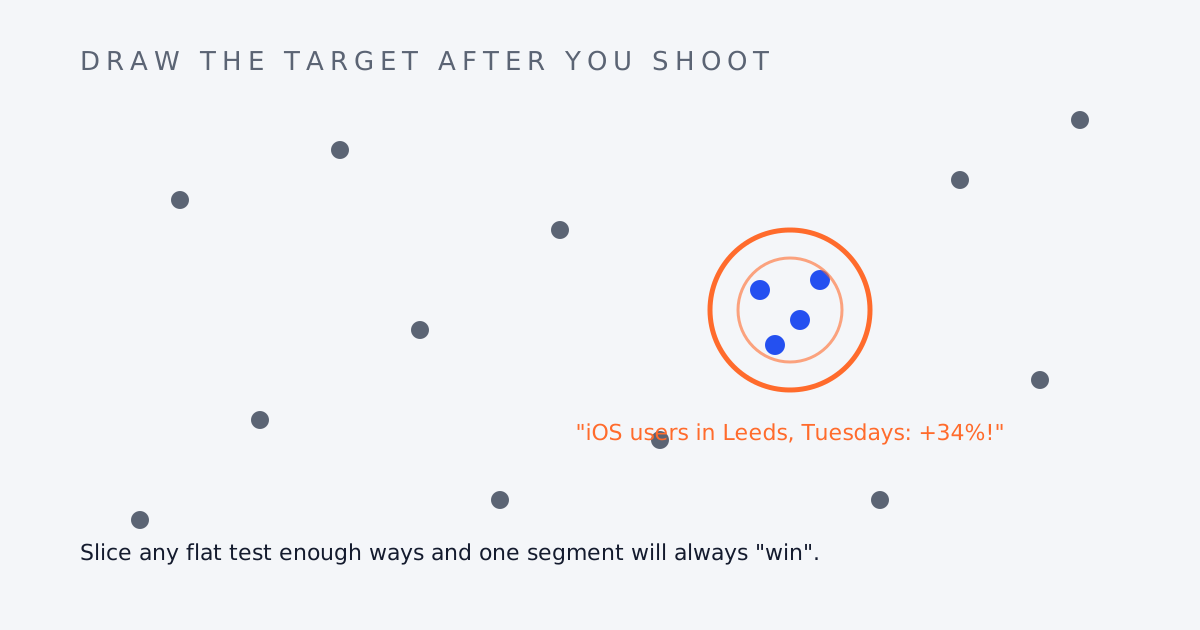
The Texas sharpshooter fires his rifle at the side of a barn, walks over, and paints a target around the tightest cluster of bullet holes. Bullseye.
CRO has its own version, and it happens in the meeting after a test comes back flat. Nobody wants to write "inconclusive" after three weeks of work, so someone opens the segment report. Desktop? Flat. Mobile? Flat. Mobile Safari? Down a bit. Returning visitors on Android who arrived from paid social? +34%, significant! The deck gets a slide: "variant wins with our high-intent mobile audience."
The target has been painted around the bullet holes.
Why this is guaranteed to happen
Run a test at 95% confidence and each segment you examine carries roughly a 5% chance of a false positive on its own. Check twenty segments — device × browser × new/returning × channel gets you there fast — and the chance that at least one shows a spurious "significant" result is over 60%. On a genuinely null test. Every time.
And it's worse than the raw multiple-comparisons maths, because segments are small. Small samples produce wild swings, so the most extreme numbers in any segment report will always come from the thinnest slices — which are precisely the ones people find most exciting. "+34% with iOS users in Leeds" is exciting because only 212 people were in that bucket.
The test for whether a segment finding is real
One question: was this segment named before the test launched?
If yes — "we hypothesise this checkout change helps mobile users most, because the current flow requires horizontal scrolling on small screens" — then the segment read is legitimate. It was a prediction, and the data confirmed or refuted it. Ideally it was also powered: you checked the segment would have enough traffic to say anything.
If no, the finding is a hypothesis, not a result. That's the honest reframe, and it's genuinely useful: "this flat test generated the hypothesis that mobile users respond differently — let's design a test to check that." The sharpshooter's sin isn't noticing the cluster. It's claiming he aimed at it.
The corporate incentives that keep the sharpshooter employed
Post-hoc segment fishing persists because everyone in the room is rewarded for finding it. The agency gets a win for the monthly report. The stakeholder who championed the test saves face. The analyst gets to present something other than a shrug. The only party unrepresented in the meeting is the truth — and the future team who'll roll the change out to that segment, watch nothing happen, and quietly lose faith in testing.
This is a place where process beats virtue. Two rules do most of the work:
- Pre-register the primary metric, the success threshold, and any segments of interest before launch. Written down, dated, in the test doc. Anything not on the list is exploratory by definition.
- Label exploratory findings as hypotheses in every report, in those words. "Hypothesis generated: mobile-first users may respond better — candidate for a follow-up test" is a sentence stakeholders accept surprisingly readily, once it's the house style.
Flat tests are frustrating. But a flat test honestly reported keeps its full value: the change didn't matter, stop investing in it. A flat test laundered through segment fishing costs you twice — once for the rollout that won't work, and again for the real question you never got round to asking.