Programme strategy · 5 January 2026
Your losing tests are an asset. Start treating them like one
Winners get slides; losers get silence. But a properly documented test archive is the only CRO output a competitor can't copy — and the reason we run a public graveyard.
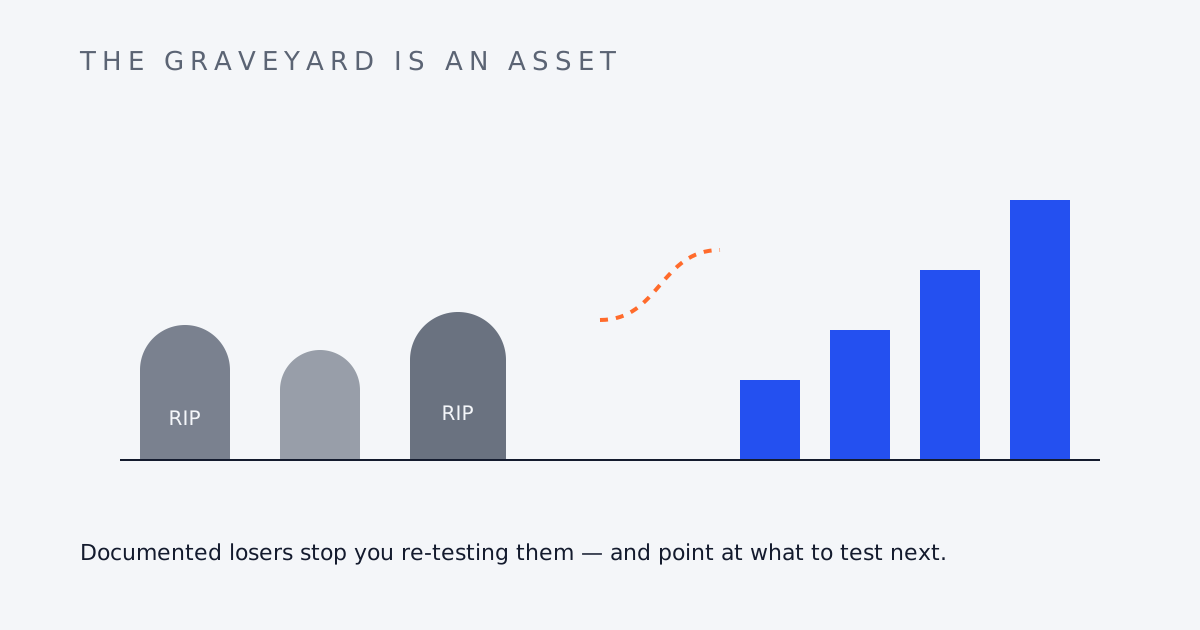
Here's a pattern we've watched play out at more than one company. A team tests a bold idea — say, leading listing pages with price rather than photography. It loses clearly. Two years pass, the team turns over, a new marketing lead arrives with fresh eyes and the same idea. It gets built again, tested again, loses again. Six weeks of design, development and traffic, spent buying an answer the company already owned.
The organisation didn't lack knowledge. It lacked memory.
Why losers are worth more than they look
A losing test, written up properly, does three jobs no winner can:
It closes a door permanently. "Winners" are provisional — effects fade, contexts change, novelty flatters them. But a clear loser on a well-powered test is one of the most durable facts CRO produces: this idea, for this audience, doesn't work. Every closed door narrows the search space for everything that follows.
It corrects your model of the customer. Tests lose because the hypothesis behind them was wrong, and the hypothesis encoded a belief — "students choose on price", "trust badges reassure", "shorter forms always win". A documented loss doesn't just kill a page variant; it flags a belief the whole business may be operating on. That's intelligence worth more than the traffic the test cost.
It's the one output competitors can't copy. Your winning page designs are public — anyone can screenshot them. Your archive of what didn't work, and why, is invisible from the outside. Two companies with identical websites and identical tools are not equal if one of them carries five years of documented dead ends. That company designs better hypotheses, wastes less traffic, and briefs new hires with evidence instead of folklore. The archive is compounding, proprietary IP that happens to look like a folder of failure.
What a useful write-up contains
Not a novel. Five fields, fifteen minutes, done while the context is fresh:
- Hypothesis — the belief being tested, in one sentence, including why you believed it
- What changed — screenshots of control and variant (pages change; screenshots are the only durable record)
- Result — primary metric, sample, duration, and the pre-registered threshold it was judged against
- Best explanation — your honest read on why, labelled as interpretation, plus any qualitative evidence
- What this closes and what it opens — ideas now off the table; hypotheses this generated
Store them anywhere searchable. The format matters less than the ritual: every concluded test gets one, and losers get the same care as winners.
Why ours is public
We publish our own dead tests — anonymised and aggregated — in the Test Graveyard. Partly it keeps us honest: a consultancy that only shows winners is showing you marketing, not evidence. Partly it's the argument of this post made concrete: a graveyard, maintained properly, reads less like a list of failures and more like a map of where the treasure isn't — which is most of what a map is.
The next time a test loses, resist the instinct to move quietly on. Write it down like it matters. In two years, when someone bright and new suggests leading with price, you'll open a document instead of a six-week build — and that moment is the asset paying out.